
 Nikhil Solanki
Web Development vs Mobile App Development: Which Path Should You Choose?
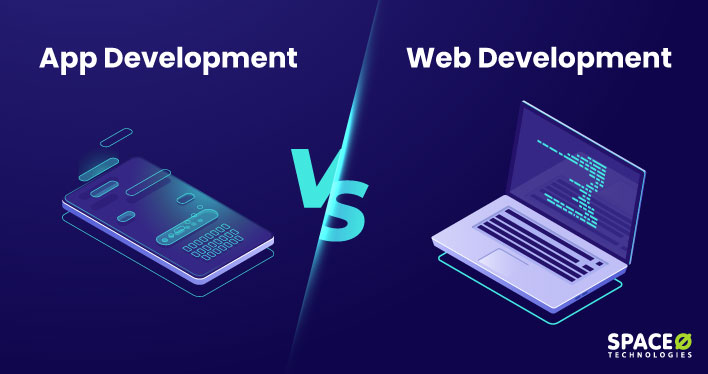
The debate between web development and mobile app development has been ongoing in tech circles for years. Both fields offer rewarding career opportunities, competitive salaries, and the chance to build products that millions of people use every day. But they require different skill sets, tools, and mindsets. If you’re a student or early-career developer trying to decide where to invest your learning time, this guide breaks down what each path looks like in 2025.
What Web Development Looks Like Today
Modern web development has evolved far beyond static HTML pages. Today’s web applications are rich, interactive experiences powered by frameworks like React, Vue, and Angular on the frontend, and Node.js, Django, or Laravel on the backend. Full-stack developers are expected to understand databases, APIs, authentication, cloud deployment, and performance optimization — all in a single role.
The barrier to entry for web development has also never been lower. A learner with zero prior experience can go from understanding basic HTML and CSS to building functional websites within weeks. Foundational skills in markup and styling are the natural first step, and structured courses help enormously here. For example, learners who want to build a strong frontend base can start with this web designing course covering HTML, CSS, and Bootstrap before moving into more complex JavaScript frameworks.
On the backend, PHP combined with MySQL remains one of the most widely deployed stacks in the world — powering content management systems, e-commerce platforms, and enterprise portals alike. Developers who understand server-side logic and relational databases remain in steady demand across industries.
The Mobile App Development Landscape
Mobile development splits into two primary tracks: native and cross-platform. Native development means building specifically for iOS (Swift) or Android (Kotlin/Java), which delivers the best performance and access to device hardware. Cross-platform frameworks like React Native and Flutter allow developers to write a single codebase that runs on both platforms — a significant advantage in terms of time and resources.
For beginners, cross-platform development is often the more accessible entry point. React Native in particular has a large community, strong documentation, and shares concepts with React web development — making it a smart bridge for web developers expanding into mobile. Developers looking to get started can explore this complete React Native mobile app development course, which walks through building real applications from scratch.
Another increasingly popular option is building mobile apps with JavaScript targeting native iOS and Android simultaneously. This approach lets web developers leverage existing skills while entering the mobile market without learning an entirely new language ecosystem.
Making the Right Choice for Your Career
There’s no universally correct answer between web and mobile development — the right choice depends on your interests, the types of products you want to build, and the job market in your target region or industry.
That said, many developers don’t have to choose exclusively. Web skills translate surprisingly well into mobile development and vice versa. Students often do internships to grow at a fast pace and figure out which environment suits them best before committing to a specialization. EasyShiksha’s full online courses catalog covers both tracks comprehensively, giving learners the flexibility to explore and pivot as their interests develop.
Whether you go web-first or mobile-first, what matters most is building real projects, shipping them, and iterating based on feedback. That practical loop — build, deploy, improve — is what separates job-ready developers from those still stuck in tutorial mode.
Share Post
Related reading
 How Cloud Computing and DevOps Are Reshaping Modern Software Development
How Cloud Computing and DevOps Are Reshaping Modern Software Development...
 Web Services: What is, Why Needed, How Works?
Web Services: What is, Why Needed, How Works? We all...
 Concept and Principles of Responsive Web Design
Concept and Principles of Responsive Web Design Responsive web design...
 Top 5 Editor or Tools for Android Application Development Services
Top 5 Editor or Tools for Android Application Development Services...