
 Nikhil Solanki
Building Smart Monitoring Systems with ESP32: From Sensors to Real-Time Alerts
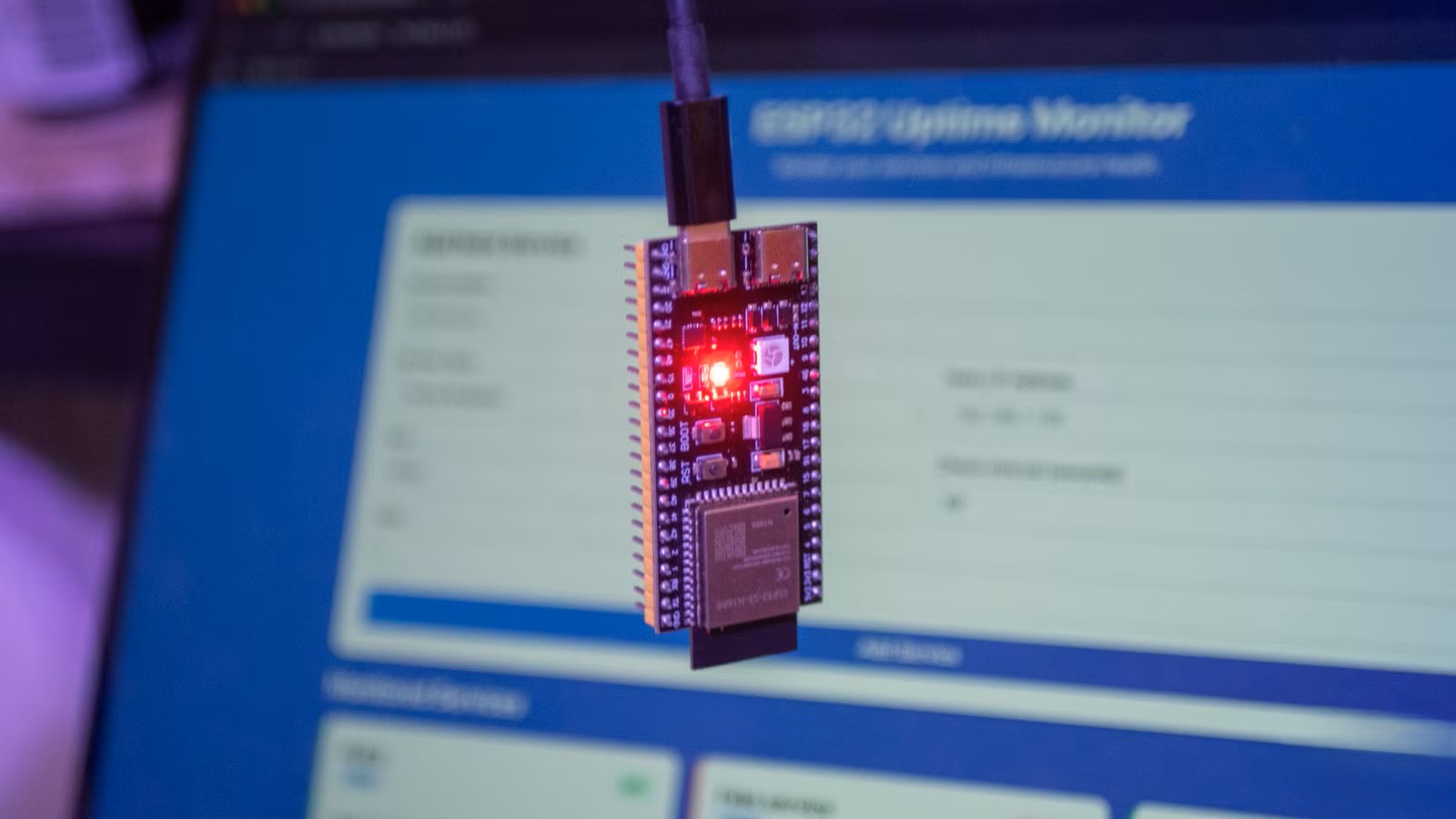
The ability to monitor physical environments remotely — and receive instant alerts when something goes wrong — has transformed industries from agriculture and manufacturing to healthcare and home automation. At the center of many of these systems sits the ESP32 microcontroller: a powerful, affordable, Wi-Fi-enabled chip that has become the go-to platform for building connected monitoring solutions. In 2025, ESP32-based projects have moved well beyond hobbyist experiments into professional deployments that solve real operational problems.
Why ESP32 Has Become the IoT Developer’s Platform of Choice
The ESP32’s appeal comes from an exceptional combination of capability and cost. For just a few dollars, developers get a dual-core processor running at up to 240MHz, built-in Wi-Fi and Bluetooth, dozens of GPIO pins, hardware support for SPI, I2C, and UART communication, and a mature software development ecosystem backed by Espressif and a massive open-source community.
Compared to earlier platforms like the original Arduino Uno, the ESP32 can handle significantly more complex tasks simultaneously — managing sensor polling, running a local web server, maintaining a cloud connection, and processing user inputs all at once without performance degradation. This makes it suitable for production-grade IoT deployments where reliability and responsiveness are non-negotiable.
The learning curve for ESP32 development is approachable for developers with basic electronics and programming experience. Those who want a structured introduction to the platform from first principles can begin with this ESP32 bootcamp taking a step-by-step practical approach, which builds competency progressively through hands-on projects rather than abstract theory.
Sensor Integration and Real-Time Alerting
The most common ESP32 application pattern involves reading data from one or more sensors — temperature, humidity, pressure, motion, gas concentration, water level, voltage — and taking action based on that data. Actions might include logging readings to a cloud database, triggering an actuator, sending a notification, or updating a dashboard.
Email alerting based on sensor thresholds is one of the most practically useful capabilities in this category. A greenhouse monitoring system that emails a farmer when soil moisture drops below a critical level, or an industrial system that alerts a maintenance team when a motor’s operating temperature exceeds safe limits, delivers immediate operational value. Building this kind of alert system requires integrating sensor reading, threshold logic, and email delivery — concepts that work together in a coherent, learnable pattern.
Developers who want to build ESP32 systems with email alerting capabilities can explore this course on ESP email alerts based on sensor readings, which walks through the complete implementation from hardware setup to triggered notifications — a practical project that translates directly into real-world deployments.
Remote Control and Monitoring via Web Interfaces
Beyond alerting, many IoT applications require interactive remote control — the ability to toggle outputs, adjust setpoints, or view live data from any device with a browser. The ESP32’s ability to host its own standalone web server makes this possible without any external infrastructure. A device connected to a local network or the internet can serve a complete control interface directly from the microcontroller itself.
This standalone web server capability is particularly valuable in environments with limited or unreliable internet connectivity, where cloud-dependent solutions would be impractical. Factories, farms, and remote installations can all benefit from locally-hosted monitoring interfaces that remain functional even when external connectivity drops.
For developers who want to master this architecture, this ESP web server course covers building fully functional standalone servers on the ESP32 — from serving HTML interfaces to handling HTTP requests that control physical outputs in real time.
From Prototype to Production
Students often do internships to grow at a fast pace within IoT product companies, where they experience the full journey from breadboard prototype to manufactured, deployed product. The gap between a working prototype and a production-ready device involves ruggedized enclosures, reliable power management, over-the-air firmware updates, remote diagnostics, and security hardening — all skills that build on the ESP32 foundations covered here.
The monitoring systems being built on ESP32 today are laying the groundwork for the more sophisticated industrial IoT infrastructure of tomorrow. Developers who invest in these embedded skills now are positioning themselves at the forefront of one of the most consequential technology transitions of the decade.